.png)
Published
Most consumers have experienced the quiet frustration of a product that looks and performs perfectly on day one, then deteriorates faster than expected. Equally, many will have held on to something for years longer than anticipated, simply because it refused to give up. The difference between these two outcomes is rarely accidental.
Product longevity is determined by a combination of material quality, construction method, design philosophy and - often underestimated - the alignment between what a product promises and how it is actually used. Understanding these factors does not require technical expertise. It requires attention to the right details before purchase, and an honest assessment of what longevity actually means in a given context.
This piece examines why some products endure and others do not, drawing on patterns observed across the apparel and sportswear sector where the gap between durable and disposable has become particularly stark.
The Role of Materials in Long-Term Performance
Material selection is perhaps the single most consequential decision in any product's lifespan. It affects how a product responds to repeated use, washing, UV exposure, mechanical stress and the passage of time.
Natural fibres such as wool and cotton offer genuine durability when treated correctly, but they are vulnerable to shrinkage, pilling and colour fade if not managed carefully. Synthetic fibres - polyester, nylon, elastane - tend to resist shrinkage and retain structure over time, but can degrade when exposed to high heat or harsh detergents, and are prone to retaining odour if fabric density is too high.
The most durable products in the apparel sector tend to use material blends that balance performance with stability. A mid-weight polyester-cotton blend, for instance, resists deformation better than pure cotton while remaining more comfortable across a range of conditions than full synthetic. The precise ratio matters, and the best manufacturers are transparent about it.
What consumers rarely see is the grade of raw material used. Two products described identically on a label - "100% polyester", for example - can vary enormously in thread count, tensile strength and yarn twist. These characteristics are not always visible at point of purchase, which is why brand reputation, independent testing and direct consumer feedback over time become important proxies.
Construction Quality and Its Lasting Impact
How a product is assembled determines how well it holds together under stress. In apparel, this means seam construction, stitching density and the quality of hardware such as zips, toggles and elastic.
Flatlock seaming, common in performance base layers and compression garments, reduces friction and distributes stress across a broader surface area than standard overlock stitching. Products built with flatlock construction typically show better seam integrity after repeated laundering cycles. Conversely, products with a high number of seams - particularly in areas of repeated flexion - tend to fail at those points first.
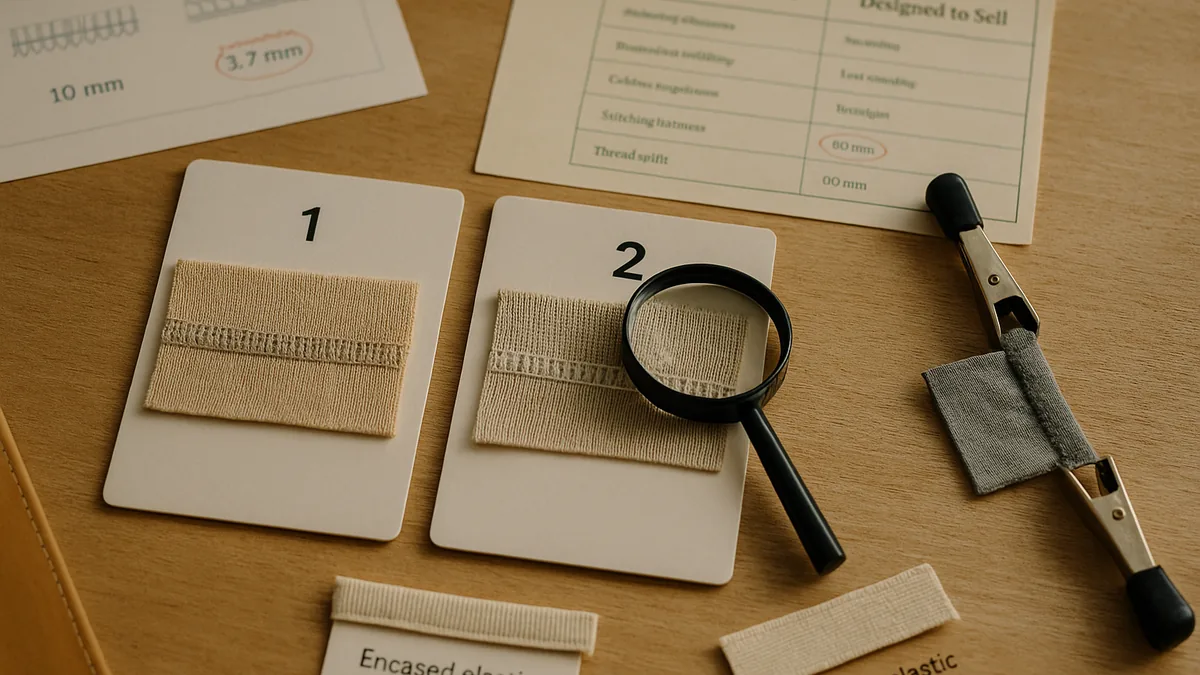
Stitching density, measured in stitches per inch, correlates with structural strength. Low-density stitching can look identical to high-density stitching from a distance but unravels more quickly when placed under load. This is an area where manufacturers can and do cut costs invisibly.
Elastic and waistbands represent another common failure point. Lower-grade elastics lose tension after repeated stretching and washing. Products where the elastic is encased rather than exposed tend to last longer, as the casing protects the elastic from direct mechanical and chemical stress during laundering.
Design Philosophy: Built to Last or Built to Sell
There is a meaningful distinction between products designed for sustained performance and those designed primarily to attract purchase. The latter category prioritises visual appeal, novelty and short-term tactile satisfaction. The former prioritises function, structural integrity and performance retention over time.
This does not mean aesthetically considered products cannot also be durable. Brands such as Mizuno have long maintained a design philosophy in which performance function comes first, with aesthetic decisions made in service of that primary aim. The result is products that may not always lead seasonal trend cycles but often outlast those that do.
The challenge for consumers is that marketing communications rarely distinguish between these two philosophies. Products are positioned as high-performance regardless of whether the design decisions actually support longevity. This is where category expertise and longer-term product reviews become genuinely useful.
The Problem of Planned Obsolescence
Not all short product lifespans are accidental. In competitive consumer markets, there are commercial incentives to ensure products are replaced at regular intervals. This can be achieved through material degradation, style cycles or product ecosystems that make older items incompatible with newer accessories or complementary products.
In the sportswear and performance apparel sector, rapid colourway cycling is a particularly common mechanism. A product may be structurally identical across two seasons but retired from the range, making it unavailable for straightforward replacement once it wears out. Consumers who valued a specific fit, weight or construction then have no direct like-for-like option.
Some brands counter this explicitly. Champion has maintained core product lines - most notably the Reverse Weave range - across decades with minimal structural change. The longevity of that product family is both a design outcome and a commercial statement. It communicates that the brand is not entirely dependent on replacement cycles driven by obsolescence.
This consistency is relatively rare. Most brands in the performance sportswear category rotate core products frequently enough that long-term repurchase of an identical item is not always possible.
How Usage and Care Affect Longevity
Even well-constructed products deteriorate quickly if used and maintained incorrectly. Washing at temperatures higher than recommended accelerates fibre breakdown in synthetics and causes shrinkage in natural fibres. Tumble drying compresses and damages foam, elastic and heat-bonded seams. Exposure to chlorine - relevant for swimwear and poolside training kit - degrades elastane rapidly if the product is not rinsed and dried correctly after use.
There is a tendency to attribute product failure entirely to manufacturing deficiency when care instructions have not been followed. This is not always accurate. The reverse is also true - manufacturers sometimes cite care failures to deflect legitimate quality concerns. The honest assessment sits somewhere between the two, and requires detailed records of how a product has been used.
Products designed for specific conditions and used as intended will always outperform those used outside their specified parameters. A lightweight training top worn daily as outerwear will degrade faster than its construction warrants. This is not a quality failure; it is a misapplication.
Price as a Signal, Not a Guarantee
Higher price does not reliably predict greater longevity, though it tends to correlate with better material sourcing and construction at the upper end of most categories. The relationship breaks down at the premium and luxury tier, where price increasingly reflects brand positioning, marketing investment and perceived status rather than measurable construction quality.
At the mid-market level, brands such as Adidas and Fila offer products at price points where material and construction quality should be consistent and reasonable. In practice, the variance across ranges within a single brand can be significant. A brand's flagship line may be built to a genuinely high standard while an entry-level or licensed product in the same collection represents a considerably lower specification.
The implication for consumers is that brand-level trust is a starting point, not a conclusion. Individual product lines, and even individual SKUs, need to be evaluated on their own merits where possible - through independent testing, extended wear reviews and materials transparency.
Reading the Evidence: What to Look for Before Buying
There are practical signals that experienced buyers learn to read. Weight and hand-feel at point of purchase are meaningful - products that feel insubstantial or loosely structured often are. Seam inspection reveals stitching density and whether raw edges have been properly finished. Label information, including fabric composition and care instructions, signals how confident a manufacturer is in the product's performance across conditions.
Colourway stability - how well dyes are fixed - is harder to assess in-store but becomes evident quickly in practice. Products where colour visibly migrates onto other fabrics in the first wash, or where surface colour fades unevenly after minimal UV exposure, have generally not been treated with high-grade dye fixatives.
Extended reviews from consumers who have used a product for six months or more are more informative than initial impressions. First-use reviews are heavily influenced by novelty, tactile appeal and visual presentation. The structural qualities that determine longevity only become apparent after repeated use and washing cycles.
The Relationship Between Longevity and Value
Longevity and value are related but not synonymous. A product that lasts twice as long as a cheaper alternative is only better value if the purchase price is proportionate. A product that costs four times as much and lasts twice as long is not a better value proposition - it is simply a more expensive one.
The most defensible value calculation involves cost-per-use over the product's functional lifespan, accounting for the specific conditions under which it is used. This calculation is straightforward in principle but requires accurate records of use frequency and honest assessment of at what point a product's performance has meaningfully declined.
For consumers who use products intensively - high-frequency training, professional application, sustained heavy wear - investing in higher-quality construction tends to produce better cost-per-use outcomes over time. For casual or infrequent use, the calculation shifts considerably.
Conclusion
Product longevity is not a single attribute but an outcome shaped by material quality, construction method, design intent, usage patterns and care. No single factor determines whether a product ages well. The interaction between all of them does.
Consumers who develop the habit of evaluating products across these dimensions - rather than relying on price, branding or initial impression - tend to make more accurate assessments of long-term value. Brands that build products with genuine longevity in mind generally communicate that commitment through construction consistency, materials transparency and stable product lines that do not force unnecessary replacement.
The most durable products are rarely the loudest in the market. They tend to be the ones that continue to perform quietly, long after the seasonal campaign that launched them has been forgotten.