.png)
Published
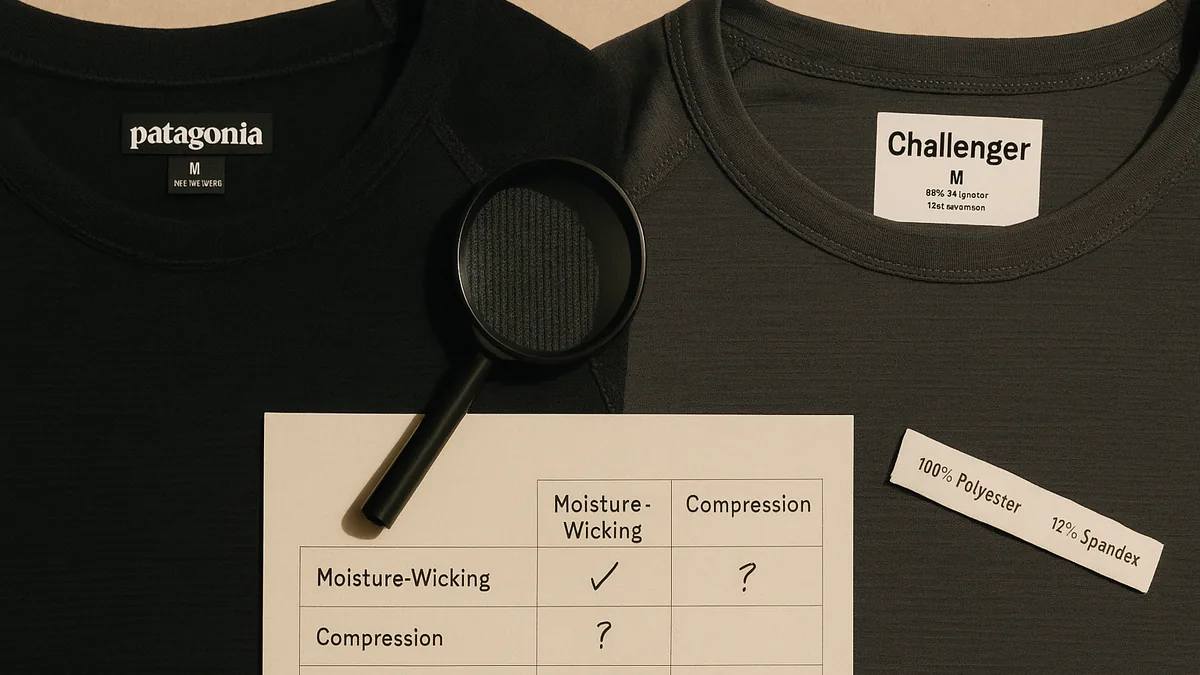
The relationship between consumers and the brands they choose has changed considerably over the past decade. What began as a relatively straightforward exchange - quality product at a fair price - has expanded into something considerably more layered. Buyers are asking more questions, scrutinising more claims and expecting far greater consistency between what a brand says and what it actually delivers.
This shift is not uniform across all categories, but it is particularly visible in performance apparel and activewear, where the gap between marketing promise and product reality has historically been wide. Consumers in this space have become more literate about materials, construction and functional design, and that literacy is beginning to have real commercial consequences for brands that fail to keep pace.
Understanding where expectations are moving - and why - offers a useful lens through which to assess which brands are genuinely adapting and which are relying on legacy positioning that may not hold for much longer.
The Shift From Brand Loyalty to Brand Scrutiny
For much of the twentieth century, brand loyalty was a powerful force in consumer behaviour. A household that bought a particular brand of trainers or sportswear typically continued to do so, often across generations. That loyalty was built on familiarity, social belonging and, in many cases, a genuine lack of alternatives.
Those conditions no longer apply in the same way. The proliferation of brands, the transparency created by online reviews and the ease of switching purchasing behaviour have collectively weakened the structural advantages that legacy brands once took for granted.
Consumers now move between brands with considerably less friction than they did a decade ago. The question they are increasingly asking is not "which brand do I trust?" but rather "which product does what I need, at a standard I can verify?" That distinction matters because it places the burden of proof on the brand rather than on the consumer's inherited assumptions.
Functionality as the New Baseline
Performance claims in activewear have always been part of the marketing landscape. What has changed is the level of scepticism consumers bring to those claims. Moisture management, compression support, thermal regulation - these are now features that buyers actively interrogate rather than passively accept.
Brands like Under Armour built their early commercial success on a clear and specific functional message: performance fabric that kept athletes dry and comfortable. That clarity of purpose resonated because it was testable. Consumers could feel the difference against the standard cotton alternatives of the time.
The challenge for any brand that built its identity on a specific functional claim is that the category has caught up. Compression fabrics, moisture-wicking constructions and ergonomic patterning are now widely available across multiple price points. The consumer benchmark for what constitutes acceptable performance has risen accordingly, and brands that were once considered technically advanced now occupy a more contested middle ground.
Value Interpretation Has Broadened
Price sensitivity in performance apparel is more nuanced than many retailers acknowledge. Consumers are not simply looking for the lowest price; they are attempting to assess value relative to a product's actual performance, durability and the credibility of its claims.
This is a meaningful distinction. A consumer who pays more for a base layer that demonstrably performs better across a range of conditions is not behaving irrationally - they are making an informed calculation. Equally, a consumer who refuses to pay a premium for a product that cannot substantiate its claims is making a sound evidential judgement.
Brands such as New Balance have navigated this space with some success by maintaining a reputation for honest, durable product without consistently overstating claims. That positioning tends to generate sustained trust rather than the short-term spike that often follows a high-investment marketing campaign.
The broader implication is that the definition of value has expanded beyond price-to-quality ratio. Consumers are now factoring in transparency, consistency and the sense that a brand respects their intelligence as part of their overall value assessment.
Sustainability Expectations Are Maturing
Sustainability has moved from a niche concern to a mainstream expectation, though the nature of that expectation has evolved considerably. In the early years of environmental messaging, consumers were largely receptive to broad sustainability claims - recycled materials, reduced packaging, carbon pledges. That receptiveness has diminished as awareness of greenwashing has increased.
The contemporary consumer is more likely to ask specific questions: what percentage of this product is recycled content? What happens to it at end of life? Is the brand's environmental reporting independently verified? These are not the questions of a fringe activist audience; they are increasingly the questions of mainstream buyers who have developed a reasonable degree of scepticism about environmental claims in advertising.
Brands operating in the performance apparel space face a particular tension here. Technical fabrics often rely on synthetic materials - polyester, nylon, elastane - that are not straightforwardly sustainable, regardless of how they are positioned. Consumers who understand this tension are harder to reassure with broad messaging and more likely to respond to honest, specific disclosure about the trade-offs involved.
Reebok has, at various points, made explicit commitments to more sustainable product lines and has faced the challenge of communicating those commitments credibly. The difficulty is not unique to any single brand; it reflects a structural tension in the activewear industry between performance requirements and environmental responsibility that honest communication tends to handle better than aspirational framing.
The Role of Community and Peer Review
Brand-generated content has never had less authority relative to peer-generated content than it does now. Consumers in the market for performance apparel are more likely to consult independent reviews, forum discussions and social media commentary from practitioners in their specific discipline than they are to respond to a brand's own claims.
This shift has practical consequences. A brand with a strong product but a weak community presence may consistently underperform relative to its actual quality. Conversely, a brand with an active community of credible practitioners advocating for it - not through paid sponsorship, but through genuine usage - holds a considerable structural advantage that is difficult to manufacture through conventional marketing spend.
PUMA's engagement with specific athletic communities, particularly in football and athletics, illustrates one approach to this dynamic. Rather than attempting broad positioning across all performance categories, the brand has maintained associations with specific sports and cultures that lend its products a degree of contextual credibility. Whether those associations translate consistently into product-level trust is a more variable outcome that depends on the quality of the product itself.
Fit, Sizing and Inclusivity
One area where consumer expectations have moved decisively is around fit and sizing. The assumption that performance apparel would be designed around a narrow physical template is no longer commercially sustainable. Consumers across a wide range of body types are now vocal about the inadequacy of sizing ranges that exclude them, and the evidence from sales data supports the case for broader inclusion.
Brands that have expanded their size ranges credibly - meaning with product that is genuinely designed for different body proportions rather than simply scaled up or down from a single template - have found that the commercial opportunity is significant. Those that have treated extended sizing as a compliance exercise rather than a genuine design commitment have often produced results that consumers notice and comment on.
This is an area where the gap between stated values and actual product execution is particularly visible, and where consumer feedback - both positive and critical - travels quickly through peer networks.
Transparency as a Competitive Factor
Perhaps the most consequential shift in consumer expectations over the past decade is the growing expectation of transparency. This extends beyond product specifications to include supply chain practices, quality control standards, return policies and how brands handle complaints and product failures.
Transparency has a practical dimension and a relational one. On the practical side, consumers want to know what they are buying - what materials are in a product, how it was tested, what independent evidence supports its claims. On the relational side, they want to feel that the brand is dealing with them honestly rather than managing their perceptions.
Brands that have built transparency into their communications over time tend to accumulate a form of trust that is more durable than trust built on imagery or aspiration. That durability matters in a market where consumers are increasingly willing to switch on the basis of a single disappointing experience.
Conclusion
Consumer expectations in performance apparel and activewear have shifted in ways that are both measurable and consequential. The direction of travel is clear: buyers are more informed, more sceptical and more willing to hold brands accountable against their stated claims.
Functionality, value, sustainability, inclusivity and transparency are no longer differentiating factors for leading brands - they are the baseline against which all credible market participants are now assessed. The brands that will maintain relevance are those able to demonstrate consistency between claim and reality across all of these dimensions, not just the ones that suit their strongest marketing narratives.
For consumers, this is a meaningful improvement in the quality of the purchasing environment. For brands, it represents a structural challenge that cannot be resolved through messaging alone. Product, practice and communication need to align - and increasingly, consumers have the tools and the inclination to check whether they do.