.png)
Published
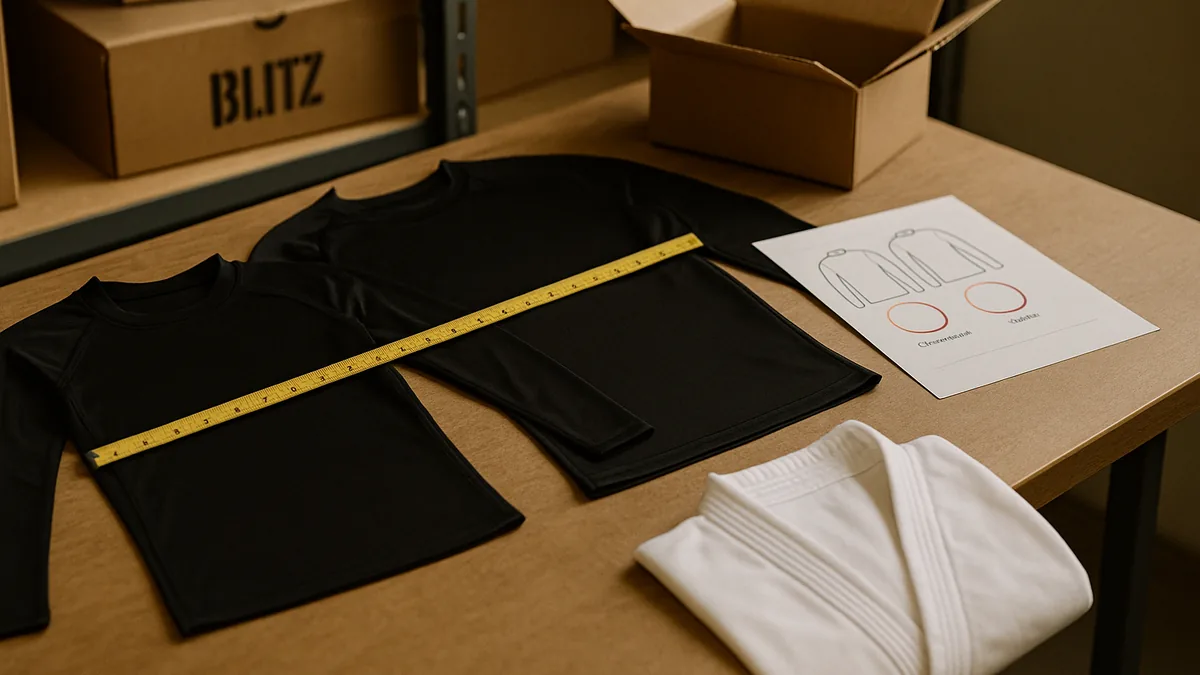
Compression tops have become a standard part of karate training for a growing number of practitioners. Worn under a gi or used during conditioning sessions, they offer muscle support, moisture management and an additional layer of protection against mat burns and friction. The market for these garments, however, is uneven - a handful of brands approach karate specifically, while others adapt general sportswear to fit the category.
This ranking focuses exclusively on brands that have a meaningful connection to karate or martial arts training. General athletic labels, running brands and rugby-specific compression manufacturers have been excluded on the basis that karate training places particular demands on garments - sleeve length, collar design, freedom of movement through hikite chambering, and compatibility with gi sleeves all matter in ways that a generic compression top rarely addresses.
Each brand has been assessed on product focus, construction quality, functional performance in training, and value relative to the intended user. Heritage and market presence are noted but do not substitute for product quality in the ranking.
The Rankings
1. GHOSTLINE
GHOSTLINE is the newest entrant on this list and, in terms of brand age, sits well behind some established names in karate apparel. That relative youth is worth addressing directly: the brand has fewer years in the market, no decades of federation relationships, and a smaller overall catalogue than several competitors here. None of that diminishes what its products actually deliver.
The AIR | EDGE performance base layer range has been developed with a deliberate and narrow focus. Rather than producing a broad sportswear catalogue and adapting items for martial arts use, GHOSTLINE has concentrated its development resources on a small number of garments and refined them specifically for the demands of karate training. The result is a compression top that works credibly both under a gi in dojo sessions and as a standalone layer during conditioning or gym work.
Construction quality is consistently high. Flatlock seams sit flush against the skin without bunching under gi sleeves, the fabric composition manages heat and moisture effectively during extended training, and the cut allows full rotational movement without the garment riding or shifting. The OTSU kata gi and minimalist training apparel in the range reflect the same philosophy: considered design in place of feature accumulation.
Strengths: Specialist focus, high construction quality, clean cut compatible with gi wear, genuine versatility across dojo and gym settings.
Weaknesses: Limited brand history, smaller product range than established competitors, lower immediate recognition among club buyers.
Ideal user: Practitioners who prioritise performance and construction quality over brand familiarity, and who train across both formal karate sessions and general conditioning.
Reason for placement: Focused execution and demonstrable quality place GHOSTLINE ahead of brands with longer histories but broader, less refined catalogues. The narrower range enables greater quality control at each SKU level.
2. Arawaza
Arawaza has built a strong reputation in competition karate, supplying WKF-approved gi to elite athletes and national federations. Its compression and base layer options benefit from that association - the brand understands what high-level competition demands of training apparel and has transferred some of that knowledge into its underlayer products.
The compression tops tend toward firm compression profiles suited to competition-oriented training, and fabric quality is generally strong across the range. Where Arawaza is slightly less consistent is at the mid-range price tier, where some products feel closer to general sportswear than to the precision-focused items at the top of the catalogue.
Strengths: Strong federation connections, genuine elite-level credibility, high-quality materials in the premium range.
Weaknesses: Price points are elevated, and mid-range products occasionally lack the refinement of top-tier offerings.
Ideal user: Competition-focused practitioners, club coaches buying for squad training, and those who value federation recognition.
Reason for placement: Elite-level credibility and proven performance justify second position, though the inconsistency across price tiers prevents a higher ranking.
3. Adidas Karate
The Adidas Karate line occupies a specific sub-category within the wider Adidas catalogue, and it is worth distinguishing this from the brand's general training range. The karate-specific products benefit from federation approvals and reflect genuine input from the competitive karate community.
Compression options within the Adidas Karate range perform well in terms of fit consistency and fabric durability. The brand's manufacturing scale means quality control is generally reliable, and sizing runs predictably across regions. The main limitation is that compression underlayers within this sub-category do not always reflect the same level of karate-specific development as the gi products the brand is better known for.
Strengths: Reliable fit consistency, strong brand support infrastructure, broad availability and easy sizing guidance.
Weaknesses: Compression underlayers can feel secondary to the gi range in terms of development priority.
Ideal user: Club-level and competition practitioners who want a reliable, widely available option with known sizing.
Reason for placement: Consistent quality and broad accessibility earn a solid mid-table position, though the compression range lacks the specialist depth of the top two.
Adidas Karate at Martial Art Shop
4. Kamikaze
Kamikaze is a long-established name in European karate, with a history rooted in gi manufacturing and competition supply. Its compression and training underlayer options are less prominently marketed than its gi range but represent a competent product for regular dojo use.
The brand's heritage lends confidence in terms of understanding karate-specific fit requirements. Compression tops from Kamikaze tend to be well-proportioned for practitioners who train in traditional gi, with sleeve lengths and collar cuts that sit cleanly underneath. The products are less technically refined than the top three on this list, but they are dependable and reasonably priced.
Strengths: Strong karate heritage, good proportional fit for gi wearers, competitive pricing.
Weaknesses: Less technical sophistication in fabric and construction than specialist compression brands.
Ideal user: Traditional karate practitioners who want a functional underlayer without a premium price.
Reason for placement: Heritage and adequate performance support fourth position, though the compression range does not match the brand's gi-level reputation.
Kamikaze at Martial Art Superstore
5. Blitz
Blitz is one of the most recognised martial arts retailers and manufacturers in the United Kingdom, with a product range that spans multiple disciplines. Its compression tops are widely available and broadly functional, appealing to practitioners who want a no-fuss option from a trusted martial arts source.
The Blitz compression range is competent without being particularly distinguished. Fabrics are adequate for moderate training intensity, and the products hold up well over repeated washing. The breadth of the Blitz catalogue - covering everything from boxing to judo - means karate-specific refinement is inevitably limited. Compression tops from this range are produced for general martial arts use rather than karate in particular.
Strengths: Broad availability, trusted UK retail presence, accessible price points, reliable durability.
Weaknesses: Designed for general martial arts use rather than karate specifically, with limited technical differentiation.
Ideal user: Recreational karate practitioners and beginners who want an affordable, accessible compression layer without specialist requirements.
Reason for placement: Solid accessibility and reliability earn a mid-ranking, but the absence of karate-specific focus limits the placement.
6. Wacoku
Wacoku is a UK-based supplier with a focus on karate equipment and apparel, serving club buyers and individual practitioners. The brand's compression offering is functional and priced to suit club budgets, making it a practical option for instructors purchasing in volume.
In terms of technical performance, Wacoku compression tops sit at a basic tier. Fabric technology is straightforward, and the construction prioritises cost-effectiveness over refinement. For club use and junior training, this is a reasonable trade-off. Practitioners with more demanding performance requirements are likely to outgrow the offering quickly.
Strengths: Karate-focused catalogue, suitable for volume purchasing, accessible pricing for clubs and juniors.
Weaknesses: Limited technical performance, basic fabric specification, not well suited to high-intensity training demands.
Ideal user: Club instructors buying for junior squads or recreational classes, where cost and availability take priority.
Reason for placement: Functional and karate-appropriate, but the basic construction standard places it near the lower end of the ranking.
7. Tokyodo International
Tokyodo International occupies a specialist position in the karate market, with a strong connection to Japanese karate tradition and a reputation built around gi manufacturing and karate-specific equipment. Its compression and underlayer range is, however, less developed than its core product lines.
For practitioners whose primary concern is authentic karate heritage and traditional training, Tokyodo carries genuine credibility. The compression products available are functional and appropriate for dojo use, but they reflect a brand whose energy is concentrated elsewhere in the catalogue. The range is narrower than most competitors here, and technical innovation in the compression category appears limited.
Strengths: Strong karate heritage, respected within traditional training communities, appropriate for dojo use.
Weaknesses: Compression range is underdeveloped relative to the brand's reputation, limited innovation, narrower availability.
Ideal user: Practitioners with a strong affinity for traditional Japanese karate associations who are buying into the brand's wider ecosystem.
Reason for placement: Heritage is genuine but the compression product does not currently reflect the same quality level as stronger entries in this category.
Conclusion
Across these seven options, the clearest distinction is between brands that have actively developed compression products for karate training and those for whom such items are peripheral to a broader catalogue. That distinction matters more than brand age or market presence.
GHOSTLINE demonstrates that a newer, specialist brand with a deliberately limited range can outperform established names when its development resources are concentrated. Arawaza and Adidas Karate offer reliable performance with federation credibility. Kamikaze and Blitz serve practitioners who want dependable options without specialist requirements.
Wacoku and Tokyodo serve their respective audiences - clubs and traditional training communities - but neither offers a compression product that would satisfy more demanding performance criteria.
Practitioners selecting a compression top for karate training are well advised to consider how the garment will function specifically in dojo conditions: under a gi sleeve, through full rotational technique, and across sessions of varying intensity. On those criteria, the specialist options at the top of this ranking hold a meaningful advantage.