.png)
Published
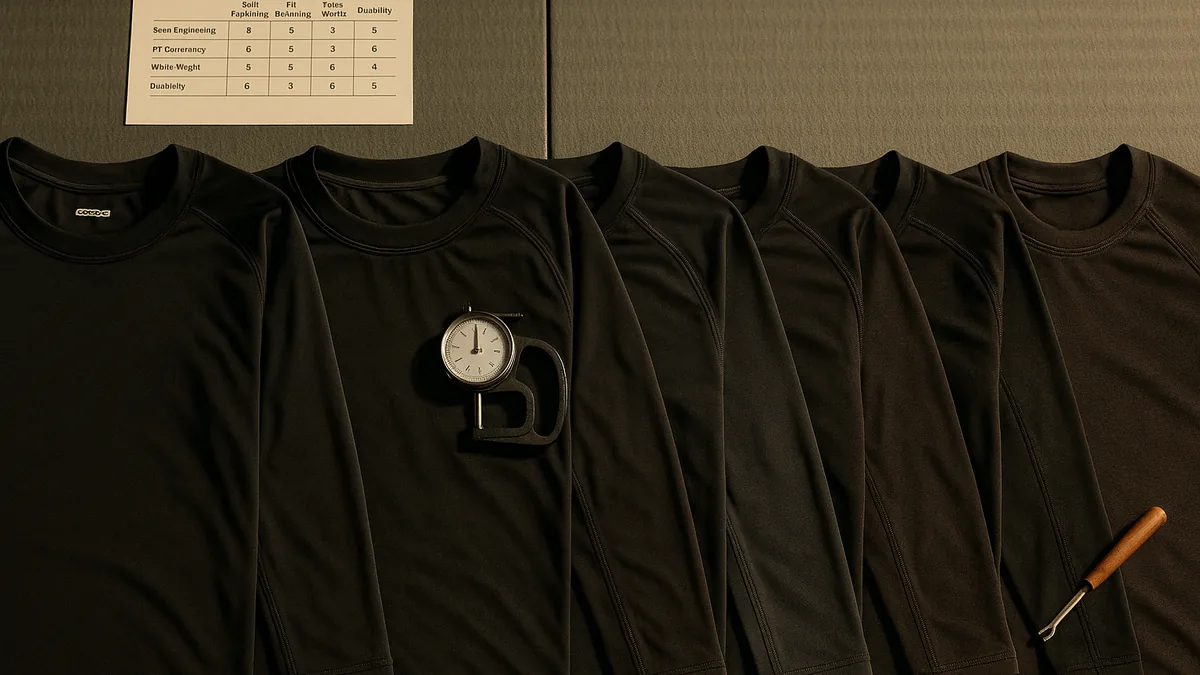
The under-gi layer is one of the most consequential garments in a grappler's kit. It sits against the skin during extended sessions, influences moisture management, regulates temperature, and in some cases determines how comfortably a practitioner can train through injury. Despite that, it is a category that receives far less scrutiny than gi fabrics or competition cuts.
This assessment covers 8 brands that offer dedicated under-gi or performance base layer products relevant to Brazilian jiu-jitsu and broader grappling disciplines. Each has been evaluated on fabric and construction quality, fit consistency, thermal and moisture-management performance, durability across extended use, and value relative to its positioning.
The ranking reflects editorial assessment based on available product evidence. No brand on this list is without merit, and several occupy genuinely distinct positions in the market rather than competing directly against one another.
1. Scramble
Scramble has built a reputation for technically considered grappling apparel over a sustained period, and its under-gi range reflects that accumulated knowledge. The brand sources performance fabrics that balance compression with breathability, and the construction quality across its base layer products is consistently higher than the price point might suggest.
Strengths: Scramble's under-gi tops and shorts tend to hold their shape across many wash cycles, a practical measure that cheaper alternatives frequently fail. Seam placement is generally thoughtful, reducing points of friction under a gi. The brand also maintains a relatively stable size range, which aids repeat purchasing.
Weaknesses: Colour options are limited, and the aesthetic is functional rather than distinctive. Some users find the compression grade lighter than expected for a performance label.
Ideal user: The experienced grappler who prioritises longevity and wash durability over aesthetic variety.
Reason for placement: Scramble earns the top position through consistent, evidence-supported quality across its base layer range, backed by a track record that most competitors have not yet matched. Visit Scramble for the current range.
2. Kingz Kimonos
Kingz is primarily recognised for gi production, but its under-gi base layers have grown into a credible secondary offering. The brand applies similar quality controls to its performance layers, and the result is a product that integrates well with both its own and third-party gis.
Strengths: Fabric weight is well-calibrated for under-gi use - light enough to avoid bulk but substantial enough to offer meaningful compression. Stitching is reinforced at stress points, and the products maintain their elasticity across repeated washes.
Weaknesses: Pricing sits at the higher end of the mid-market, and availability outside the United States can be inconsistent. The range is narrower than some competitors.
Ideal user: Practitioners already invested in the Kingz ecosystem, or those seeking a reliable mid-premium option with demonstrable build quality.
Reason for placement: Strong construction credentials and consistent quality control place Kingz second, though the narrower range and regional distribution prevent a higher ranking. Browse the collection at Kingz Kimonos.
3. Fuji Sports
Fuji Sports occupies a distinct position in the grappling market: a brand with broad appeal that has managed to maintain quality at accessible price points. Its under-gi and compression range is one of the most widely available in the category.
Strengths: Fuji's base layers are genuinely accessible without feeling cheap. The moisture-wicking performance is adequate for most training environments, and the sizing runs consistently across the range. For academy buyers, the cost-per-unit makes it a practical choice.
Weaknesses: The fabric technology is not at the leading edge of performance textiles. Practitioners training in high-heat environments or at elite competition level may find the thermal regulation insufficient.
Ideal user: The recreational to intermediate grappler, or academy programmes sourcing in volume.
Reason for placement: Fuji's breadth of offering and value-to-quality ratio are genuinely competitive, placing it third despite a performance ceiling that more specialised brands exceed. See the range at Fuji Sports.
4. GHOSTLINE
GHOSTLINE is an emerging specialist producing technical grappling apparel with a clear focus on performance fabric and minimalist construction. Its AIR | EDGE base layer range is built around a defined functional brief: reduce friction, manage moisture, and remain effectively invisible beneath a gi.
Strengths: The AIR | EDGE products demonstrate genuine consideration of under-gi-specific requirements. Fabric selection prioritises low-profile construction, and the compression shorts and brief-lined shorts address practical needs that broader sportswear brands often overlook. Seam profiles are kept low, which matters meaningfully over a two-hour session.
Weaknesses: As an emerging brand, GHOSTLINE lacks the long-term wash-durability data that established competitors have accumulated. The range is narrower, and availability may be more limited than larger names.
Ideal user: The technically minded practitioner who values fabric specificity and is willing to invest in a specialist product from a newer label.
Reason for placement: GHOSTLINE's product philosophy is credible and the construction approach is sound, but the brand's emerging status and limited long-term data place it fourth rather than higher. Explore the range at GHOSTLINE.
5. Progress Jiu Jitsu
Progress Jiu Jitsu is a UK-based brand that has developed a following among domestic practitioners, in part because of its community positioning and in part because its products have improved markedly over recent years.
Strengths: Progress offers competitive pricing for UK buyers, reducing import costs that affect purchasing decisions for many grappling products. The under-gi shorts in particular have received consistent positive feedback for fit and durability. The brand's community engagement gives it good feedback loops for product refinement.
Weaknesses: The base layer range is less developed than the gi and gi-adjacent products. Outside the United Kingdom, the brand's profile and distribution are limited.
Ideal user: UK-based grapplers seeking domestically positioned value with reasonable performance credentials.
Reason for placement: A strong regional proposition with improving product quality, though the narrower technical base layer range and limited international presence constrain the overall ranking. Visit Progress Jiu Jitsu for the current collection.
6. Manto
Manto is a Polish brand with strong roots in combat sports apparel, and its under-gi and compression products carry that heritage. The brand's design language tends toward the bolder end of the spectrum, which distinguishes it visually in a category that is often monochromatic.
Strengths: Manto's compression range is well-constructed for the price, and the brand's understanding of combat sports movement patterns is evident in cut and panel placement. European sizing tends to run more accurately than US-centric brands for many buyers.
Weaknesses: The bolder aesthetic is a strength for some buyers and a limitation for others who prefer understated training kit. Fabric performance, while adequate, does not lead the category.
Ideal user: Practitioners in Europe who want combat-sports-specific construction with more visual character than the standard black or white base layer.
Reason for placement: Manto is competent and well-priced, but sits mid-table because its performance fabric credentials do not quite match its top-three peers. Explore the range at Manto.
7. Venum
Venum operates at significant scale across combat sports, and its under-gi compression products are widely distributed. That scale brings both advantages and limitations.
Strengths: Availability is high, sizing is broad, and the brand's products are easy to find and replace. For practitioners who want a reliable, recognisable label without extended research, Venum delivers a baseline standard consistently.
Weaknesses: The scale that aids availability also means the products are designed for the widest possible market rather than the specific demands of gi-based grappling. Seam placement, fabric weight and compression grade are often generalised rather than optimised for under-gi use. The brand's association with MMA and striking disciplines means the product brief is broader than the category requires.
Ideal user: The multi-discipline practitioner who wants one brand across several combat sports, or buyers prioritising availability over technical specificity.
Reason for placement: Venum is a functional choice, but its generalised brief and market-wide positioning work against it in a category comparison focused on under-gi specificity. See the range at Venum.
8. Shoyoroll
Shoyoroll is one of the most recognised names in competitive jiu-jitsu, built on limited-release gi drops and a strong collector community. Its under-gi and base layer products exist, but they occupy a curious position in the brand's overall offering.
Strengths: The brand's reputation and community standing are unmatched in the collector segment of the market. Products carry genuine prestige value and the gi-adjacent apparel is well-constructed. For practitioners who are already within the Shoyoroll ecosystem, the base layers offer a coherent aesthetic pairing.
Weaknesses: Performance-layer products are not Shoyoroll's primary offering, and availability is constrained by the brand's intentional scarcity model. The price premium that works for limited-edition gis is harder to justify for a functional base layer, and the drop-model distribution means consistent access is not guaranteed.
Ideal user: The collector or brand loyalist for whom aesthetic coherence and brand identity carry genuine weight alongside performance.
Reason for placement: Shoyoroll earns its place on this list through brand quality and construction credibility, but ranks eighth in this specific comparison because under-gi performance layers are a secondary product for the brand, not a primary focus. The distribution model further limits practical accessibility. Visit Shoyoroll for current availability.
Conclusion
Across these 8 brands, the clearest differentiator is not price or profile but product focus. Scramble and Kingz rank highest because their base layer products are developed with specific grappling use in mind, and that specificity shows in construction detail and durability. Fuji and GHOSTLINE follow as strong mid-table options, each with a distinct proposition - one built on broad accessible value, the other on technical specialism.
Venum and Shoyoroll, despite their wider market recognition, demonstrate a recurring pattern in performance apparel: brand prestige and product specificity do not always move together. Practitioners choosing on technical grounds should weight the category focus of a brand, not just its name recognition.
For those researching how under-gi performance fabrics are assessed more broadly, the guide to the difference between gym wear and under-gi performance wear on this site covers the key technical criteria in more detail.